BLOG
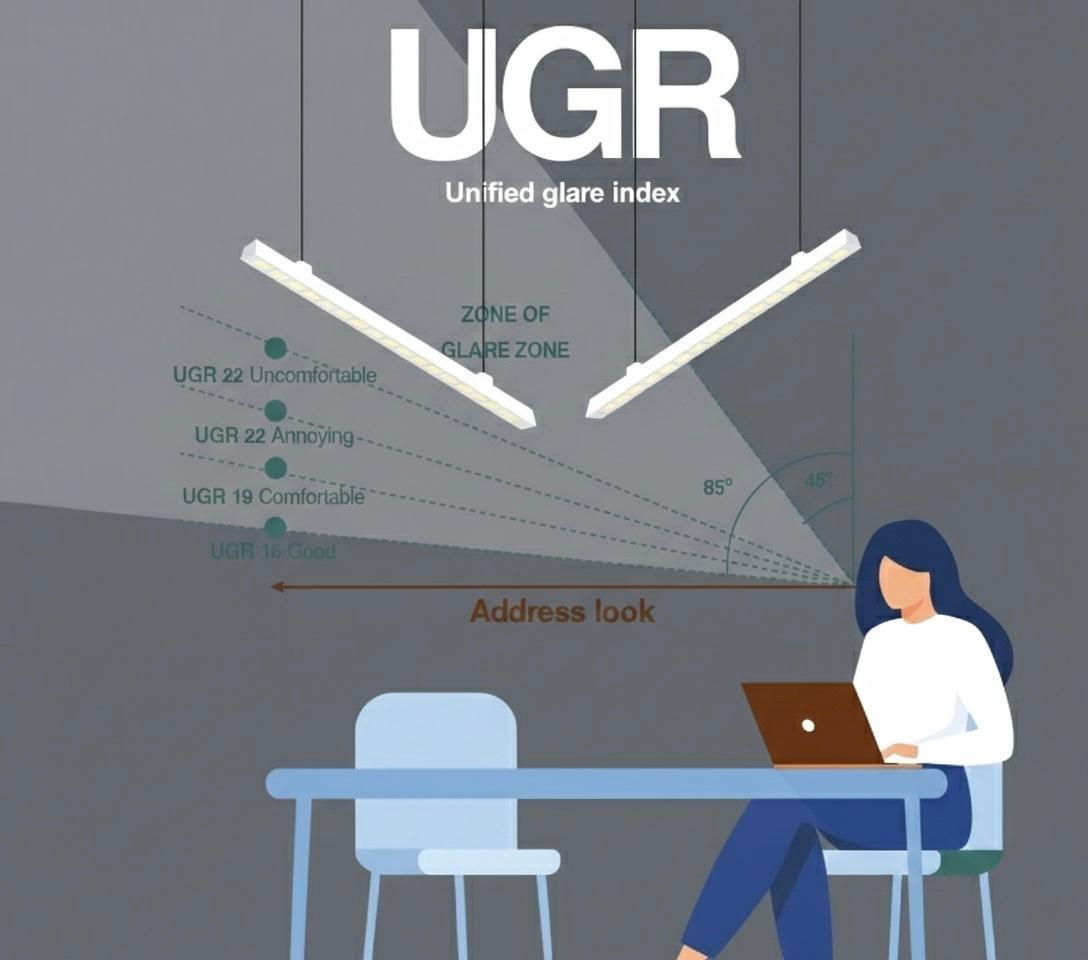
UGR is a value that objectively measures the level of glare in indoor lighting. It expresses how disturbing the light from a fixture is perceived relative to the surrounding background brightness.
UGR value:
• 5 → Very low glare
• 40 → Extremely high glare
The general rule is:
The lower the UGR, the higher the visual comfort.
International standards (EN 12464) recommend a UGR < 19 for many office and classroom environments.
UGR is typically calculated using professional lighting design software:
• Relux
• Dialux
• AGi32
The data required for the calculation are as follows:
• Photometric files of the fixtures
• Room geometry
• Surface reflectance values
• Number and arrangement of fixtures
Once this data is entered into the software, the system calculates the UGR value. UGR can only be calculated for indoor applications. It is not applicable for outdoor lighting (e.g., street lighting).

To reduce the UGR value in a project, the following steps can be applied during the design phase:
Plan the Fixture Placement Properly: Avoid fixtures directly in the user’s line of sight. For example, in classroom design, fixtures should not be in the students' line of sight to the teacher.
Choose Fixtures Correctly:
• Narrow beam angle products may be preferred.
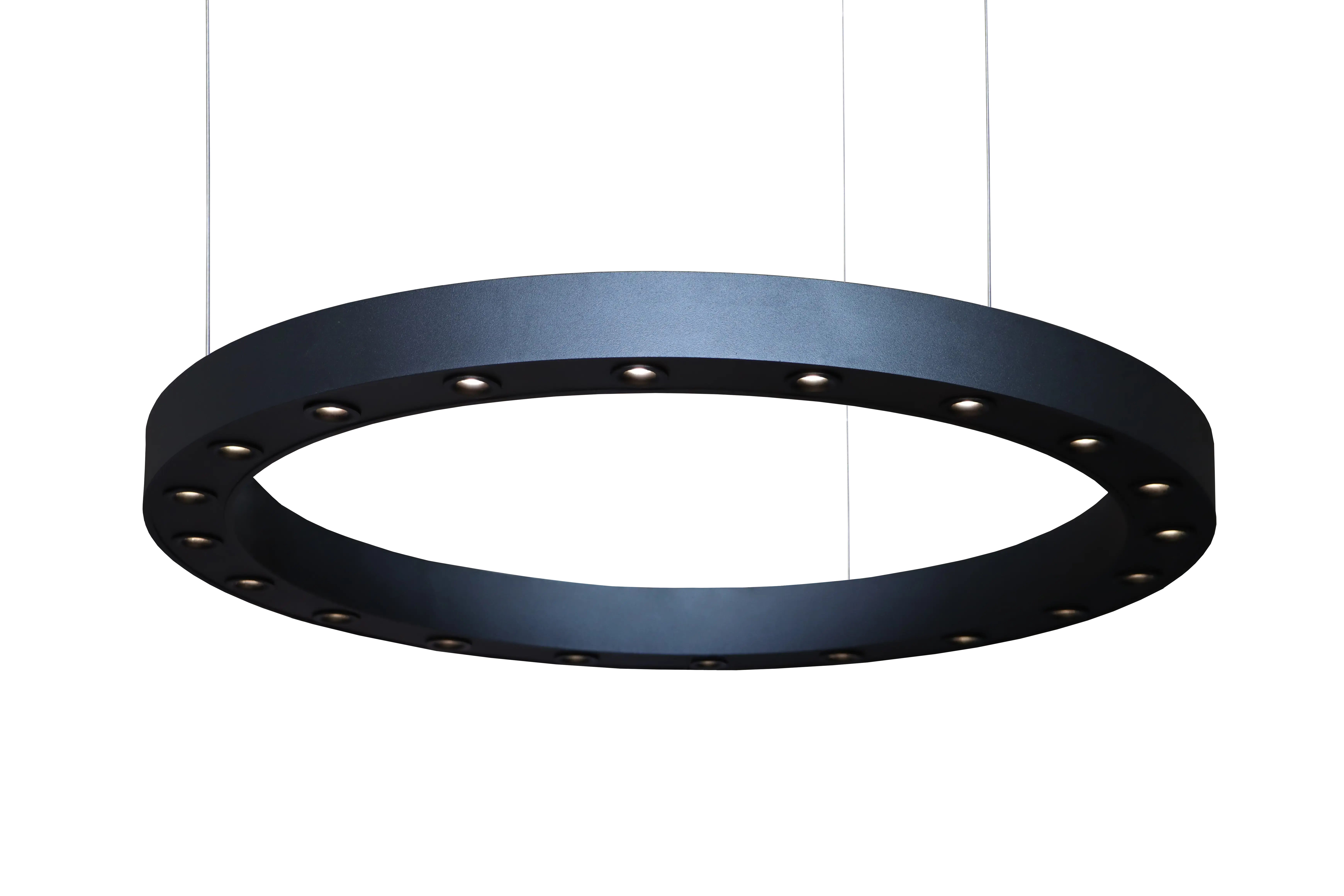
• Fixtures with recessed light sources reduce glare.
• Light surfaces hidden behind diffusers or frames may be preferred.
Increase Background Brightness: Using uplight components that reflect light to the ceiling reduces the contrast between the fixture and the background, thus lowering the UGR.
Reduce Fixture Brightness
• Lowering the wattage
• Using more fixtures to spread the light
• Distributing light intensity
Helps in reducing UGR.
In summary, to reduce UGR:
• Increase the background luminance.
• Reduce the apparent brightness of the fixture.
• Narrow the beam angle.
• Move the fixtures away from the direct line of sight.
The EN 12464 standard recommends maximum UGR values for different working areas. The standard provides recommendations for over 280 different work environments, including offices, classrooms, hospital rooms, production areas, and even indoor parking lots. These values are not legal requirements, but they are considered strong references for good lighting practices.
No. The UGR values specified in EN 12464 are recommendations. However, compliance with these values is considered a professional requirement for a well-designed lighting project.
It should be noted that after the project is designed:
• If the ceiling color is changed
• If the furniture layout changes
• If the seating height differs
The UGR value perceived in the actual environment may differ from the value in the design phase.
Conclusion: Visual Comfort Determines Performance In lighting, focusing only on lumen, Kelvin, or CRI values is not enough. UGR, which directly affects visual comfort, is a critical parameter, especially in office, educational, and healthcare areas. With the correct fixture selection and proper layout planning, it is possible to create an energy-efficient and high-visual-comfort lighting system.
OUR LATEST POSTS
© 2026 Pamir | All Rights Reserved.

 TR
TR
 DE
DE
 FR
FR
 AR
AR